People often ask me what they need to get started making tinctures. The good news is it's not much - you can make effective plant medicine with things you probably already have in your kitchen.
The Essentials
At its heart, a tincture is just three things: herbs, alcohol (or another menstruum), and a glass jar. That's it. Everything else makes the process easier or your finished product prettier, but isn't strictly necessary.
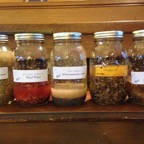
Jars for Steeping
Your herbs will steep in these for 4-6 weeks, sometimes longer. Any glass jar with a tight-fitting lid works. I like wide-mouth mason jars because they're easy to fill and strain, and they last forever.
If you're working with light-sensitive herbs, amber mason jars are nice because you don't have to remember to store them in a dark cupboard. But honestly, I've made plenty of tinctures in clear jars kept in a kitchen cabinet with no problems.
Bottles for Finished Tinctures
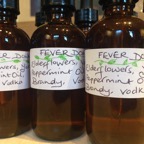
Once your tincture is ready, you'll strain it into smaller bottles for daily use. Amber glass dropper bottles are the standard - the dark glass protects the medicine from light, and the dropper makes dosing easy. I usually use 2oz bottles, though 1oz bottles are good for traveling or trying new formulas.
The graduated droppers that show measurements (0.25ml to 1ml) are helpful when you're learning dosing, but I'll admit I rarely look at the lines anymore. After a while you just know what a dropperful looks like.
Straining
When it's time to strain, you'll press the liquid through cloth to separate the plant material. I use unbleached cheesecloth (grade 90, the finest weave) inside a mesh strainer. The strainer holds the cheesecloth and rests on the jar rim, freeing your hands to squeeze.
A set of small funnels is invaluable for transferring tincture to dropper bottles without spilling.
About the Alcohol
This is the part you can't buy on Amazon - shipping alcohol is complicated. You'll get your menstruum at the liquor store.
Vodka (80 proof) is the standard choice. It extracts well from dried herbs and has a neutral taste. Nothing fancy needed - the mid-shelf stuff works fine.
Brandy adds warmth to a formula. I use it for elderberry elixirs and root-based tinctures. There's something nice about the depth it brings.
Everclear (151 or 190 proof) is for fresh herbs and resins. You usually dilute it. Note that 190 proof isn't legal everywhere - check your state.
Glycerin makes alcohol-free tinctures (glycerites). They're sweeter and gentler, which is good for kids. You can find food-grade vegetable glycerin online. Glycerites don't keep as long - a year or two versus basically forever for alcohol tinctures.
Other Helpful Things
A kitchen scale is useful if you want to be precise about herb-to-alcohol ratios. I use weight-to-volume measurements (like 1 part dried herb to 5 parts alcohol by weight) for consistency between batches.
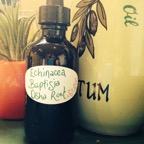
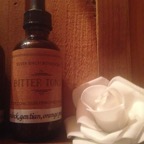
Labels matter more than you'd think. After a few months, all those amber bottles start looking the same. I write the herb, the date started, and the alcohol percentage on everything.
Getting Started
If you're making your first tincture, start simple:
- Pick one herb - something gentle like lemon balm or chamomile
- Fill a pint jar about 1/3 full with dried herb
- Cover completely with vodka, leaving an inch of headspace
- Cap it, label it, shake it daily for a moon cycle (about 4 weeks)
- Strain and bottle
That's really all there is to it. The plants do most of the work.
Not ready to make your own? Browse my handcrafted tinctures - made with intention using organic and wildcrafted herbs.
Some links on this page are affiliate links. If you purchase through them, I earn a small commission at no extra cost to you.